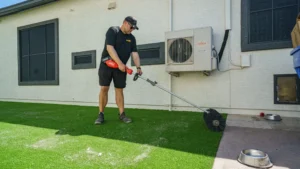
In Arizona, backyard season doesn’t wait for spring. As soon as February rolls around and the days start warming up, homeowners and pet parents are ready to spend more time outside. Whether it’s letting the dogs run free, hosting weekend get-togethers, or simply enjoying your outdoor space, your artificial turf should be clean, fresh, and ready to go.
But after months of cooler temperatures, less foot traffic, and winter debris, many turf lawns aren’t as “ready” as they look.
February is the perfect time to give your artificial turf a little attention before backyard season kicks into full gear. Use this simple readiness checklist to make sure your lawn is safe, odor-free, and looking its best, and to avoid common issues that tend to show up once spring arrives.

Why February Matters for Turf Maintenance in Arizona
Unlike colder climates, Arizona turf doesn’t get a true winter break. Even during cooler months, dust, leaves, pet waste, and organic debris continue to build up. Since most homeowners rinse their turf less frequently in winter, odors and bacteria can become trapped below the surface.
By February, these hidden issues often start to surface, just as you’re spending more time outdoors.
Taking care of turf maintenance now:
- Prevents lingering pet odors as temperatures rise
- Helps turf fibers recover before heavy use
- Improves drainage ahead of spring activity
- Keeps your lawn clean, safe, and inviting
Think of February as your “reset button” before backyard season officially begins.

Your February Turf Readiness Checklist
1. Clear Away Winter Debris
Even if your turf looks clean at first glance, winter often leaves behind:
- Leaves and pine needles
- Dust and dirt buildup
- Pet hair
- Organic debris trapped between fibers
This debris can trap moisture underneath the turf, leading to odors, mildew, and bacteria growth.
What to do:
Use a leaf blower or plastic rake to gently remove debris. Avoid metal tools, which can damage turf fibers. Pay extra attention to corners, fence lines, and pet-favorite areas where buildup is most common.
2. Check for Lingering Pet Odors
One of the biggest turf issues we see in February is odor, especially in pet households. Cooler temperatures often mask smells during winter, but once the sun starts warming things up, those odors come back fast.
If your turf smells worse:
- In the afternoon sun
- After it gets wet
- In specific pet areas
…there’s likely urine residue and bacteria below the surface.
What to do:
Light rinsing helps temporarily, but it won’t eliminate odor-causing bacteria. Spot-clean pet areas with turf-safe cleaners and avoid harsh chemicals that can damage fibers or backing.
If odors keep returning, it’s a sign your turf needs a deeper clean.

3. Inspect Turf Fibers for Flattening
Winter weather, wind, and reduced foot traffic can cause turf fibers to lay flat over time. Flattened turf not only looks worn but can also affect drainage and comfort.
What to do:
Light brushing helps lift turf fibers back into an upright, natural position. Use a turf-safe broom or brush and work against the grain. This step alone can dramatically improve the look of your lawn.
If large areas remain matted, professional brushing and infill adjustment may be needed.
4. Test Drainage and Look for Problem Areas
February is a great time to check how well your turf drains before backyard season ramps up.
After rinsing or rain, look for:
- Standing water
- Slow drainage
- Areas that stay damp longer than others
Poor drainage can trap odors, encourage bacteria growth, and lead to premature wear.
What to do:
Make sure debris isn’t blocking drainage areas. If drainage problems persist, professional inspection may be needed to address infill compaction or base issues.
5. Refresh Infill Levels
Infill plays a critical role in turf performance. It helps support fibers, improves drainage, reduces odor retention, and keeps turf comfortable underfoot.
Over time, infill can:
- Shift
- Compact
- Wash away
- Trap pet odors
What to do:
Check high-traffic and pet areas for uneven or compacted infill. Light brushing helps redistribute it, but deep cleaning and infill refreshes are often needed to fully restore performance.
6. Sanitize for a Healthy Play Space
Your turf isn’t just landscaping, it’s a space for kids, pets, and barefoot lounging. Winter buildup can harbor bacteria, allergens, and germs that aren’t visible but still impact cleanliness.
What to do:
Sanitizing your turf helps eliminate bacteria and creates a safer environment for everyone using it. February is an ideal time to sanitize before spring play and entertaining begin.

7. Consider a Professional Turf Cleaning
While regular at-home maintenance helps, it doesn’t address what’s happening below the surface. A professional turf cleaning:
- Removes deeply trapped debris
- Neutralizes odors at the source
- Sanitizes and deodorizes
- Restores fiber appearance
- Improves drainage and turf longevity
February is one of the best times to schedule a professional cleaning, before peak spring demand and before small issues turn into bigger problems.
Get Backyard-Season Ready With Confidence
A clean, fresh lawn makes all the difference once outdoor season begins. Taking time in February to prepare your turf means:
- Less stress later
- Fewer odors
- A healthier space for pets and family
- A lawn you can actually enjoy
At Squeaky Clean Turf, we help Arizona homeowners and pet parents get their lawns ready for the season ahead. Whether it’s your first professional cleaning, a seasonal refresh, or targeted odor control, our team is here to help.
Not sure if your turf is ready?
Contact us today for a professional assessment and get your lawn backyard-season ready before spring arrives.