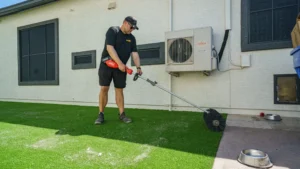
Artificial turf offers a great low-maintenance alternative to natural lawns, but even synthetic grass needs regular care to stay looking fresh, safe, and functional. This is especially true in climates like Arizona’s, where summer heat and dust, occasional heavy rains, and intense sun exposure can take a toll. In this post, we’ll walk through seasonal turf-care best practices to help you maximize lifespan, comfort, and appearance.
At Squeaky Clean Turf, we believe good maintenance is key to keeping your turf investment looking and performing its best. Check out our turf cleaning services for professional deep cleaning, fiber restoration, and infill maintenance for homes or commercial properties.
Summer Care: Beat the Heat & Maintain Comfort
Regular Rinse and Cooling
Because artificial turf can heat up significantly under direct sun, it’s important to rinse it with cool water occasionally. A gentle spray with a garden hose can help reduce surface temperature and remove dust, pollen, or debris.
If turf is used by pets, families, or guests, rinsing helps keep the surface more comfortable, especially in the hottest part of the year.
Frequent Brushing to Keep Fibers Upright
Summer often means more foot traffic, more use, and more exposure to sun, which increases the risk turf fibers get matted or flattened over time. A stiff-bristle broom or specialized synthetic-fiber brush can help revive the blades, keeping your turf looking full and lush.
Brushing helps redistribute infill (if your turf has it) and ensures better airflow, which can reduce heat buildup and prolong turf life.
Spot Cleaning & Odor Control (Especially for Pet Use)
In hot climates, pet urine or other organic residues can dry quickly and lead to odors. It’s important to promptly remove solids, rinse the area, and if needed, use a pet-safe cleaning solution to neutralize odors and bacteria.
Avoid harsh chemicals or strong detergents that could damage turf fibers or infill; soft rinsing and mild cleaning solutions are safest.
Avoid Extended Heavy Loads & Heat Sources
Furniture, grills, potted planters, or other heavy/heat-emitting objects should not be left sitting on turf for long periods, especially in high-heat conditions. Constant weight or heat exposure can deform turf fibers or compress infill, reducing performance and longevity.
Rainy-Season & Post-Storm Care: Managing Water and Debris
Even though Arizona doesn’t have snow, occasional heavy rains or dust storms can create debris build-up or drainage issues. Here’s how to maintain turf through these events:
Clear Debris Promptly After Storms or Wind Events
Leaves, twigs, dust, or other debris can settle onto turf and, if left too long, clog drainage or trap moisture which can lead to possible mold or odor issues. Use a plastic rake or blower (not metal rakes) to remove debris safely.
Regular clearing of debris helps preserve drainage, prevents organic matter breakdown, and keeps turf looking tidy.
Rinse After Heavy Use or Rain
After rain or heavy use (pets, foot traffic, events), rinsing turf can help flush out dust, pollen, or residues brought in by weather or activity. A gentle hose rinse is usually enough. Avoid high-pressure washers that might disturb infill or damage turf backing.
Inspect Infill Levels, Seams and Drainage Periodically
Rain, use, and cleaning can shift or degrade infill over time, especially in heavy-use or commercial areas. Seasonal checks of infill depth, loose seams, or drainage blockages ensure your turf remains safe, well-draining, and comfortable.
Promptly address any issues like uneven surfaces, infill depletion, or loose seams to avoid larger problems down the road.
Year-Round Best Practices for Long-Term Turf Health
While seasonal routines help, there are evergreen practices you should maintain all year for a healthy turf surface:
- Use plastic or synthetic-fiber brooms or rakes and avoid metal tools that can damage turf fibers or backing.
- Remove organic debris (leaves, twigs, pollen) regularly to prevent buildup that can cause odors, mold, or drainage problems.
- After spills, pet accidents, food, or beverages, be sure to clean and rinse quickly to avoid staining or lingering odors.
- For large or high-traffic areas, consider periodic professional maintenance (deep cleanings, infill refresh, fiber restoration) to keep turf at its best as provided by Squeaky Clean Turf.
Why Professional Maintenance Matters: When to Call Squeaky Clean Turf
Home-owners or businesses may handle basic upkeep, but periodic professional maintenance ensures deeper cleaning, full infill redistribution or replenishment, and expert inspection for wear or damage. At Squeaky Clean Turf we offer services to help maintain your turf’s health, safety, and appearance.
Whether you’re a homeowner, a pet owner, a gym, a playground, or a business with turf, investing in periodic professional care can help your turf last longer, stay safer, and look its best.
If you would like to request a quote or schedule seasonal maintenance, you can message us at Squeaky Clean Turf and we’ll assess your needs and recommend a custom maintenance schedule.
Final Thoughts
Artificial turf is a smart investment, but it’s not “no-maintenance.” With a little regular care through summer heat and rainy seasons, rinsing, brushing, cleaning, debris removal, and occasional professional maintenance can keep your turf looking fresh, safe, and comfortable year-round.
For those in dry, hot climates like Arizona, combining consistent maintenance with occasional professional cleanings offers the best long-term results. If you have questions, or want a consultation on seasonal care or deep cleaning, reach out to us at Squeaky Clean Turf.
Let’s keep your turf green, clean, and ready for use.