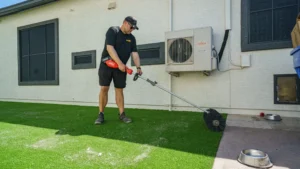
Artificial turf is designed to look lush and green year-round with minimal upkeep. But over time, many homeowners notice that their once-vibrant lawn is starting to look patchy, dull, or even moldy. Discoloration, fading, and mold growth are common turf issues, especially in warm climates, with pets, or in high-traffic yards. The good news is that these problems are often reversible with the right approach, and if not, they can be managed to extend the life of your turf.
In this article, we’ll break down why turf becomes discolored, moldy, or faded, what you can do about it, and when it’s time to call in professionals like Squeaky Clean Turf for expert help.
Why Turf Gets Discolored, Moldy, or Faded
1. Sun Exposure & UV Damage
Just like outdoor furniture, turf fibers are vulnerable to ultraviolet rays. Over years of exposure, UV light breaks down the pigments in the blades, causing fading and a dull appearance. This is especially common in sunny states like Arizona, California, and Nevada.
2. Pet Urine & Organic Matter
Pet urine is one of the leading causes of yellow or dark patches on turf. Unlike natural grass, artificial turf doesn’t absorb urine, it sits in the infill and backing, where bacteria can multiply. Left untreated, this leads to odors, discoloration, and eventually mold.
3. Mold & Mildew from Poor Drainage
Artificial turf is designed with drainage holes, but if your base wasn’t installed properly or if organic debris (leaves, pet hair, soil) builds up, water can pool. This creates a breeding ground for mold, algae, and mildew, which appear as dark green, black, or white fuzzy patches.
4. Heavy Traffic & Wear
High-traffic areas such as walkways, play zones, or dog runs can flatten turf fibers, making them look worn and faded. While this is less about color loss and more about texture, it contributes to the overall dull look.
5. Cleaning Product Residue
Some homeowners attempt to clean turf with bleach, harsh soaps, or pressure washers. While well-intentioned, these methods can damage the turf fibers, strip away protective coatings, and leave behind residue that causes discoloration.
How to Fix Discolored Turf
If your turf looks dull, stained, or uneven in color, there are a few steps you can take:
1. Regular Rinsing
Start simple: hose down your turf once a week. This helps flush away pet urine, dirt, and dust that dulls the color. Use a garden hose with moderate pressure, avoid power washing, which can damage fibers.
2. Turf-Safe Cleaners
Use turf-specific enzymatic cleaners to break down organic matter (especially urine). These cleaners neutralize bacteria and odors while protecting the color of your turf. Always check that products are pet-safe and eco-friendly.
3. Brushing & Grooming
A stiff turf brush (never metal) helps lift matted fibers and restore the “fresh cut grass” look. Brushing also redistributes infill evenly, preventing areas from appearing darker or lighter than others.
4. Spot Cleaning Stains
For localized discoloration, mix a solution of 50% water and 50% white vinegar. Spray directly on the affected area, let sit for 15–20 minutes, and rinse thoroughly. Vinegar helps kill bacteria and deodorize without damaging turf fibers.
5. Professional Deep Cleaning
If discoloration is widespread, it’s time to schedule a professional cleaning. Companies like Squeaky Clean Turf use specialized equipment to sanitize, deodorize, and rejuvenate turf, restoring its natural look.
How to Treat Mold & Mildew on Turf
Mold is not only unsightly, but it’s also a health risk for pets and children. Here’s how to safely handle it:
1. Remove Debris
Clear leaves, soil, and organic matter from the surface. Mold feeds on organic material, so eliminating its food source is step one.
2. Apply a Mold Treatment
Use a turf-safe anti-fungal spray (never bleach). Enzyme-based or vinegar solutions can also be effective for mild cases. Apply generously, scrub lightly with a turf brush, and rinse.
3. Improve Drainage
If mold keeps coming back, your turf may have drainage issues. Check for compacted infill or blocked drainage holes. A professional cleaning often includes rebalancing the infill to restore proper water flow.
4. Regular Maintenance
Prevent mold by hosing down your turf after rain or pet use, keeping it free of debris, and brushing it weekly. In shady or damp areas, increase the frequency of cleaning.
What To Do If Turf Is Faded
Fading is trickier to reverse than stains or mold because it’s often caused by UV damage. Here are your options:
1. Deep Clean First
Sometimes turf looks faded simply because it’s dirty. A professional clean can make faded turf look significantly brighter.
2. Use Turf Refreshers
There are turf-safe sprays designed to restore color and shine. While not a permanent solution, they enhance appearance and protect against further UV damage.
3. Consider Partial Replacement
If only certain sections (like near concrete or reflective surfaces) are faded, you may be able to replace just those panels instead of the whole lawn.
4. Full Replacement for Severe Fading
Unfortunately, if your turf is more than 8–10 years old and significantly faded, replacement is usually the most cost-effective solution. High-quality modern turf comes with UV-resistant technology to prevent future fading.
When to Call a Professional
While DIY cleaning helps, there are times when calling in turf specialists makes more sense:
- Strong odors that won’t go away despite cleaning
- Persistent mold or mildew in multiple areas
- Large sections of discoloration from urine or staining
- Flattened, dull, or faded fibers that need rejuvenation
- Drainage problems causing water pooling
A professional service like Squeaky Clean Turf uses high-grade cleaning machines, sanitizing agents, and safe deodorizers for pets and children. They don’t just clean the surface, they deep clean into the infill and backing, where bacteria and mold thrive.
How to Prevent Future Turf Problems
The best cure is prevention. Here are some maintenance tips:
- Rinse regularly – once a week in normal use, more often with pets.
- Brush monthly – to keep fibers upright and evenly colored.
- Remove debris quickly – leaves, branches, soil, and pet hair all contribute to mold.
- Use the right infill – antimicrobial infill helps reduce odors and bacteria growth.
- Avoid harsh chemicals – stick to turf-safe cleaners.
- Schedule seasonal cleanings – professional maintenance twice a year keeps turf looking new.
Final Thoughts
Artificial turf is a wise investment for homeowners who want a lush, low-maintenance lawn. But like any surface exposed to pets, weather, and heavy use, it can lose its vibrancy over time. Discoloration, mold, and fading are common, but they don’t have to be permanent problems.
With regular upkeep and the occasional professional deep cleaning, your turf can stay fresh, green, and inviting for years. And when bigger issues arise, companies like Squeaky Clean Turf are just a call away, ready to restore your lawn to its best condition.